For years, the conversation about cryptocurrency followed a predictable arc. Enthusiasts declared that decentralized digital currencies would replace the global financial system. Critics insisted the volatility made them unusable for real commerce. Both sides dug in. And while they argued, something more interesting was happening quietly in the background.
The gap was being closed — not by replacing traditional currency, but by bridging it.
That bridge is called a stablecoin. And in December 2025, Visa made it impossible to ignore.
What a Stablecoin Actually Is (And Why It Changes the Equation)
A stablecoin is a cryptocurrency designed to maintain a fixed value, like the U.S. dollar. While Bitcoin and Ethereum fluctuate with market sentiment, a stablecoin like USDC maintains a consistent 1:1 ratio to the dollar. It is backed by fully reserved assets — real dollars held in regulated accounts — which means its value doesn’t evaporate overnight.
This isn’t a compromise. It’s a design decision. Stablecoins were engineered to bring the speed, programmability, and borderless nature of blockchain technology to transactions that require the stability of traditional currency. The result is a financial instrument that operates at the intersection of two worlds and, increasingly, within the infrastructure of both.
When Banks Show Up, Pay Attention
Skeptics have long argued that cryptocurrency was a fringe technology. It was interesting to early adopters but irrelevant to the institutions that move global capital. December 2025 was a direct rebuttal to that argument.
Visa announced the launch of USDC settlement in the United States, allowing U.S. issuer and acquirer partners to settle their VisaNet obligations using Circle’s USDC stablecoin for the first time. Cross River Bank and Lead Bank became the first participants, settling with Visa in USDC over the Solana blockchain, with broader availability planned throughout 2026. By late 2025, Visa’s monthly stablecoin settlement volume had reached a $3.5 billion annualized run rate. By April 2026, that figure had doubled to $7 billion — up 50% from the prior quarter, with the program now running across nine blockchains.
Let that land. In less than six months, an institutional settlement program went from launch to $7 billion in annualized volume and expanded to nearly a dozen blockchain networks. This isn’t experimentation. It’s infrastructure. And, it is scaling faster than most people realize.
The Bridge Reduces Risk. It Does Not Eliminate It.
I want to be precise about what this moment means, because precision matters when money is involved.
Stablecoins bridge the distributed nature of cryptocurrency with the regulated, trusted architecture of global currency markets. That bridge reduces several risks that have kept institutional players on the sidelines: volatility, lack of regulatory clarity, and the absence of a familiar settlement infrastructure. The GENIUS Act, passed in July 2025, provided the regulatory framework that enabled Visa’s U.S. rollout. The combination of regulatory clarity and institutional participation is a meaningful shift.
But the bridge does not eliminate risk. Stablecoins are still digital assets. They still operate on blockchain infrastructure that requires you to understand custody — who holds your keys, where your assets actually live, and what happens if something goes wrong. The stability of the dollar peg does not protect you from the instability of a poorly secured wallet. That part of the equation remains entirely in your hands.
Which brings me to why this moment matters for every person who has been watching the new economy take shape from the sidelines.
Tangem Pay: From Cold Storage to the Coffee Shop
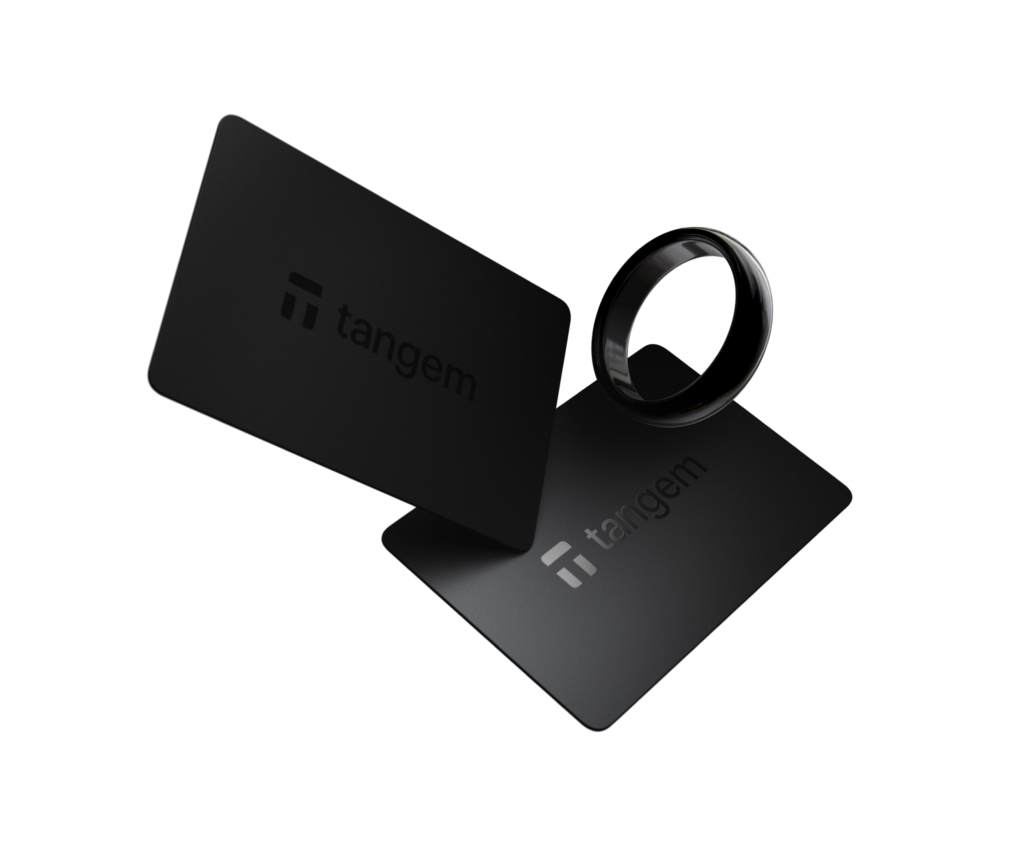
Tangem recently announced something that would have seemed like science fiction five years ago: Tangem Pay. This virtual Visa card lets you spend USDC directly from your cold wallet at millions of merchants that accept Visa worldwide.
Here is what that means in plain terms. You hold your crypto in a Tangem cold wallet. Your private keys are stored in an EAL6+ certified chip, offline, never transmitted, never accessible to a third party. Zero hacks since inception. That’s not marketing copy. It’s the security record. When you’re ready to spend, top up your Tangem Pay virtual Visa card with USDC and tap to pay anywhere Visa is accepted. Your main assets stay vaulted. Your spending account is separate. Your keys remain yours.
The same stablecoin infrastructure that Visa is now using to settle transactions with U.S. banks is the infrastructure powering your ability to buy groceries, book a flight, or pay for your morning coffee, all from your cold wallet.
Why You Should Purchase Through EOP Media
Tangem sells a wallet. We contextualize what it means to own one.
When you purchase a Tangem wallet through EOP Media, you receive an Observer Token — OBST — that grants access to More Than Crypto, our biweekly live sessions covering recent product releases, policy developments, and the practical mechanics of transacting in a market that is still being written in real time.
These are not recorded lectures you can catch later. They are live, and that’s intentional. This space moves fast. Most analyses are obsolete within two weeks. Showing up in real time is not a feature of the program — it’s the point. The questions you bring to a live session are the questions that matter right now, not six weeks ago when someone recorded a course.
Same product as buying direct from Tangem. Significantly more context for the road ahead.
Three Paths Forward. Choose Deliberately.
The new financial infrastructure is being built right now. Stablecoins are crossing into institutional settlement. Hardware wallets are becoming spending tools. Regulatory frameworks are taking shape. The window for early participation is open — but it will not stay open indefinitely. You have three real options, and I want to be honest about each one.
You can do nothing. That is a choice, and for some people it’s the right one. But understand what you are choosing: not safety, just delay. The economy being built around you doesn’t pause because you aren’t ready. The shifts will keep coming whether you are positioned for them or not.
You can go it alone. Buy the wallet, set it up, follow the news, figure it out as you go. The tools are available. The information is public. Many people take this path and do fine — until a policy changes, a new product disrupts their setup, or a question comes up at 11 pm with real money on the line and no one to call. Going alone means you weather every change by yourself, and you absorb every mistake as tuition.
Or you can build inside a community that is doing this work alongside you. Here, you have two entry points depending on where you are and where you intend to go.
If you are new to the space, start with a Tangem wallet purchased through EOP Media. Your OBST token gets you into More Than Crypto — live, biweekly sessions that keep you current as the landscape shifts. You’re not locked into anything. You get real support and real-time updates every two weeks for a year.
When you are ready to take the next step, The Agency Collective is built for that. Four commitment levels — Individual, Legacy, Builder, and Architect — each designed for a distinct stage of readiness and a distinct economic goal. Individual and Legacy members gain their tools, their TACT token, and their standing in the collective. Builder and Architect members are deploying real infrastructure — custom tokens, gated access systems, blockchain applications — within an ecosystem of people doing the same work at scale. Movement between levels is earned through engagement, not just payment.
In a community, the shifts and changes in this space are still real. But so are the people navigating them alongside you.
The bridge between cryptocurrency and the global financial system has been built. Visa laid the institutional foundation. Tangem Pay opened the door for individual commerce. The question is no longer whether this is real.
The question is: which path are you on?
Purchase your Tangem wallet through EOP Media → Explore The Agency Collective →